Flossing may not be essential, but you should floss regularly if you want the best outcomes for your oral health. But how do you floss exactly? You have probably seen people in films or on television flossing, but what are they actually doing and how does it work?
Explained simply, flossing is the movement of a thread between the teeth – this dislodges what you cannot reach by brushing alone. A good flossing routine can give you many of the benefits that come from brushing, but the two together are the best recipe for optimal dental health – so, here we will tell you how to floss properly.
Before trying to floss for the first time, see below for an illustration of how flossing works:
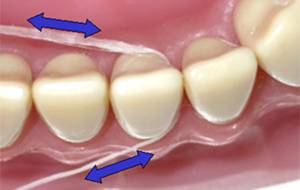
To find out how to floss between your teeth the best way we have provided an amazingly comprehensive guide below.
For professional teeth cleaning, checkups or just some good dental advice at our Brighton and Hove clinic, please feel free to get in touch with us and book an appointment.
Flossing is a typical modern practice but has been traced back to the early 1800s, for good reason! Flossing removes bits of food, bacteria and other things that can damage the teeth. Dental floss also helps to remove plaque, reduce bad breath and has many other preventative benefits. Overall, flossing is a vital part of good oral hygiene – so even if you floss only once in a while you will see some benefits.
Many people struggle with the proper technique when brushing, flossing and even just rinsing their mouth. So, let’s get some basics right from our dental professionals…
To floss properly you need to use about 45 centimetres, or 18 inches, of floss. Wrap the floss around one of your forefingers, which is the index or ‘pointing’ finger, and hold the floss tight between your forefinger and thumb on the other hand. This clean section of floss should be enough to reach each front, middle and back tooth.
Hold the floss tight between your thumbs and forefingers and move the taut floss towards the teeth. Place the floss gently between a tooth and pull down, which should then snap the floss down each side of the tooth to the gum line. Try not to pull down too hard.
When in position between a tooth, use a gentle rocking motion for the proper flossing technique. This smooth, rocking motion will make sure that you get all the remnants stuck between the teeth – and also helps to prevent any unnecessary irritation to the gums.
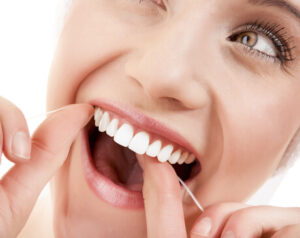
Molars have an awkward, debris-collecting shape, which makes them especially problematic. Tooth decay is not only possible on the front teeth so flossing the back teeth and molars is an important task, no matter how difficult it might seem.
Try the following when flossing back teeth:
Back teeth are more difficult to reach but every person can find a solution that works. If it is very difficult to reach then using an air or water flosser for the back teeth only is another option. Even a professional hygienist will struggle to reach back, molar or wisdom teeth occasionally.
There is no best brand or type of floss. People should use whatever they feel is comfortable or what their dentist recommends for their unique situation. Many flosses contain a fluoride solution, which will provide extra protection for the teeth and enamel, so these are often sold. There are also floss types available with popular flavourings like mint, apple, orange and more.
Although you might have a favourite, no reputable research has proven that any type of floss, such as waxed or unwaxed, is any more or less effective. Floss reaches between the teeth and is a relatively simple invention, so for the most part any type of floss you buy will have similar levels of performance.
It is a frustrating problem, but it happens to everyone!
First, off – relax. It is normal for a small piece of fibre or dental floss to get stuck between the teeth once in a while. To avoid this situation, beware of risk factors. Maybe you are doing it too fast or maybe you just have a dodgy piece of floss. Be cognizant that flossing is an intricate process.
Nonetheless, If this happens, simply let go of one of the ends of the floss. You can then pull the floss through your teeth. If the stuck piece of floss does not move so freely, try shimmying it from side to side in a gentle motion to dislodge it from between them.
One thing to avoid if floss gets stuck between your teeth is any kind of yanking or pulling. This can pull on the tooth and cause pain, irritate the gums and the fine strands of nylon in the floss might even cut or scratch the gum line, which can cause them to bleed.
As professional dentists, we understand the benefit of fitting braces. However, one of the main drawbacks, when you have wire arches pulling your teeth into position, is that you will find they can easily get in the way while brushing or flossing. But as professionals, we must say you should not try to avoid the issue.
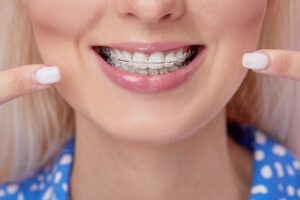
BRACES PICTURE
Care for your teeth when wearing braces is vital. We understand the frustrations of patients and offer services for nervous people. To help make it easier, keep the following pointers in mind:
Frustratingly, flossing when you have braces is proven to be more important than when you do not. Small bacteria can gather in all the little nooks and crannies of your braces and grow, which might cause further problems down the line!
There is no set rule on how many times to floss daily.
Ideally, you should floss as much as you should brush – and this is after every meal. To illustrate how important flossing can be, think about when you have had particularly crunchy food. You might find that your teeth feel kind of ‘stuck’ afterwards. This is a clear sign that there is debris between your teeth and a prime opportunity to brush or floss.
Once in the morning and once and night is a good habit, but generally the more you can floss the better. However, you should be careful not to over-floss and you must leave flossing aside if your gums become irritated or bleed – this will give them time to heal.
Alongside flossing and dental checkups, it is recommended that you see a hygienist for a professional teeth cleaning from time to time. A hygienist will floss your teeth as part of the treatment and do some other cleaning techniques, such as polishing, as well.
If using floss and dental tape is a new habit for you, or you have fallen out of your routine, you might experience sore and bleeding gums after a floss. The following are some tips to help avoid gum pain after flossing:
Flossing is not super comfortable for most people. But, like most habits, you get used to it. Try to push through the initial discomfort, before you know it you will have cleaner teeth and not even remember how weird it was in the beginning.
Floss picks, or floss sticks, the toothpick-like device that has a tethered strip of floss attached, can make flossing easier and more convenient. However, you should be aware of the following recommendations that will make them more effective:
Most dentists agree that floss picks are not quite as effective as regular floss, because it is more difficult to reach the back teeth with a small strip of floss and the quality of the floss deteriorates rapidly after flossing just a few teeth. However, they are worth having if you have no other option.
A dental bridge, which is used to restore the appearance of missing teeth, will require special cleaning. Much like the use of braces, a dental bridge can become a potential breeding ground for bacteria. This might cause bad breath, gum disease and even further tooth loss!
An air or water flosser can be very useful when flossing under a bridge, but if you want to use regular floss this is also possible. It is quite difficult to clean under a bridge with a floss stick, so it may be best to stick to regular floss.
The key to flossing with veneers is being extra gentle in your movements and not irritating the gums. If you have veneers, you might not feel the same sensitivity as you do on a natural tooth, so it is easier to irritate the area. Try to keep this in mind, but flossing will not damage a veneer.
Flossing is extremely important for oral health. Floss, alongside brushing, can help to prevent gum disease, tooth infection, tooth loss, bad breath and many other conditions. If you are not currently flossing, introducing even a small amount of it will improve your overall oral health.
As leading providers of a range of dental treatments in our Brighton and Hove clinic, we are well-placed to explain more about flossing. Our friendly team is expert in providing a variety of dental treatments. Please feel free to get in touch with us to book an appointment.
BOOK AN APPOINTMENT BUTTON
BACK TO BLOG






 INSTAGRAM