Tooth sensitivity after a filling is not uncommon, especially if you have undergone a deep filling. However, after leaving the clinic, any minor pain or numbness should subside within two hours. If not, it may be a sign that the filling has not taken well to your tooth and you may require a return visit.
Learn more about fillings, what could be causing your discomfort, and how it can be treated, by reading on here. Alternatively, you can contact us right away to book an appointment with our professional dentistry team for relief as soon as possible.

Fillings are essential, minor treatments that remove and replace the damaged or decayed part of your tooth with durable material. This material is moulded into your tooth to protect it from the risk of infection. Most fillings are metal-based, porcelain, resin, or a combination.
Having a filling is arguably the most common procedure dentists perform. It is a routine procedure that is able to alleviate any pain associated with cavities and damaged teeth and restore the tooth so you are able to eat and drink normally.
The process of having a filling can be broken down into three steps:
Your mouth will feel numb for a few hours after the procedure, and it’s advised you don’t eat anything during this time.
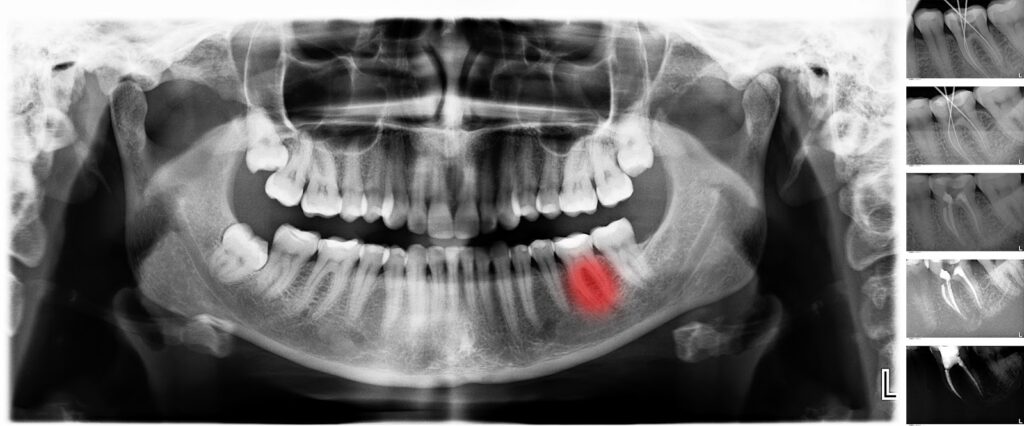
An irritated nerve is not uncommon when a deep filling is placed. Irritated nerves can result in inflammation and can cause pain. Your enamel and cementum usually protect the nerve from exposure, but deep fillings can reach the nerve endings and cause uncomfortable, sharp sensations. However, irritated nerves from deep fillings can heal over time.

One of the most important aspects of correctly fitting and placing a filling is to ensure it aligns with the patient’s bite alignment. A filling that is not properly fitted may impact the patient’s bite, which can cause discomfort for a few reasons.
If the filling is too tall, it can cause extra pressure as the person bites down, and this pressure can cause pain and discomfort. It’s not uncommon to experience some sensitivity when eating after your treatment, but your bite should correct itself over the next few weeks.
If your filling doesn’t rectify itself, you will need to revisit your dentist so they can file it down.

Pulpitis occurs when the pulp within the tooth becomes inflamed, which in turn, leads to pain and discomfort. Although it’s rare for pulpitis to occur in minor fillings, it can occur when:
Can pulpitis be treated?
If pulpitis has reached and damaged the nerve so badly it cannot be saved, you will likely need a root canal procedure to save the affected tooth. However, pulpitis may not lead to this if the pulp remains healthy and only minor inflammation has occurred. Your dentist should also be able to treat pulpitis via a filling procedure or a root canal.
If you are suffering from pain after your filling and none of the reasons above explain it, there may be a few other reasons why:

Having a cavity filled is typically a fast and painless process, but it’s not uncommon to feel some discomfort post-treatment. We have mentioned a few key tips to help with pain and sensitivity:

Most dentists would recommend sensitive toothpaste for patients who have just undergone a filling. Potassium nitrate is the chemical compound that helps stop the sensations of the surface of the tooth from reaching the nerves inside.
You must continue to use the toothpaste in order for the effects to be noticed. Whitening toothpaste should be avoided as they are known to increase tooth sensitivity.
Aside from sensitive toothpaste, patients suffering from a sensitive tooth after a filling may also consider trying:
If your tooth sensitivity after your filling does not improve, it’s advised you contact your dentist as there may be problems with placement or sensitivity unrelated to the filling.
If you are experiencing tooth sensitivity after a filling, you can arrange a checkup with our team at Hove Dental Clinic today. We will be able to assess and provide a solution to your sensitive tooth, whether that involves refitting the filling or applying a new one.
Contact our team today for more information or to make a booking, and work with a professional to find the right treatment for your filling and your sensitive teeth.
My tooth is still sensitive after a filling, is it bad?
One of the most common ways to tell if a filling is bad is if you feel a short, sharp pain when biting or chewing on that single tooth. Other symptoms may include your tooth looking grey in comparison to other teeth, this is a sign that bacteria may have entered the area between the filling and your enamel. In this case, the filling would likely be replaced.
If you have undergone a deep filling and are experiencing pain, it may be that the filling has reached a nerve and has irritated it. The nerve should heal itself, but if pain or sensitivity does not subside within two to four weeks, dental intervention may be required.
Fillings that are too low may not have been properly fitted or moulded into the gap in your tooth. This puts the filling at risk of becoming loose, breaking or falling out. If you discover your filling is loose, it’s important to revisit your dentist as bacteria will find its way into your tooth.
All modern filling procedures use a local anaesthetic to ensure you feel no pain during the procedure. Fillings are designed to alleviate any pain associated with your cavity, so once your filling has been placed, any previous pain from your cavity should be gone.
Your tooth and mouth will be sensitive after your filling, so it’s strongly advised you avoid hot and hard foods at all costs for at least two hours. Hard foods have the potential to dislodge your new filling and cause pain and discomfort, and the same goes for hot food and drink (especially if the filling is gold, silver or metal-based). However, you will be able to eat after a few hours or when the numbing sensation has passed.
You will be able to eat and drink normally after approximately two to four weeks, with the sensitivity getting better each day. However, this varies from patient to patient and depends on the severity and size of the filling.
You can take minor pain relief medication on the advice of your dentist if you have a deep filling and you feel some pain post-treatment.
BACK TO BLOG







 INSTAGRAM